
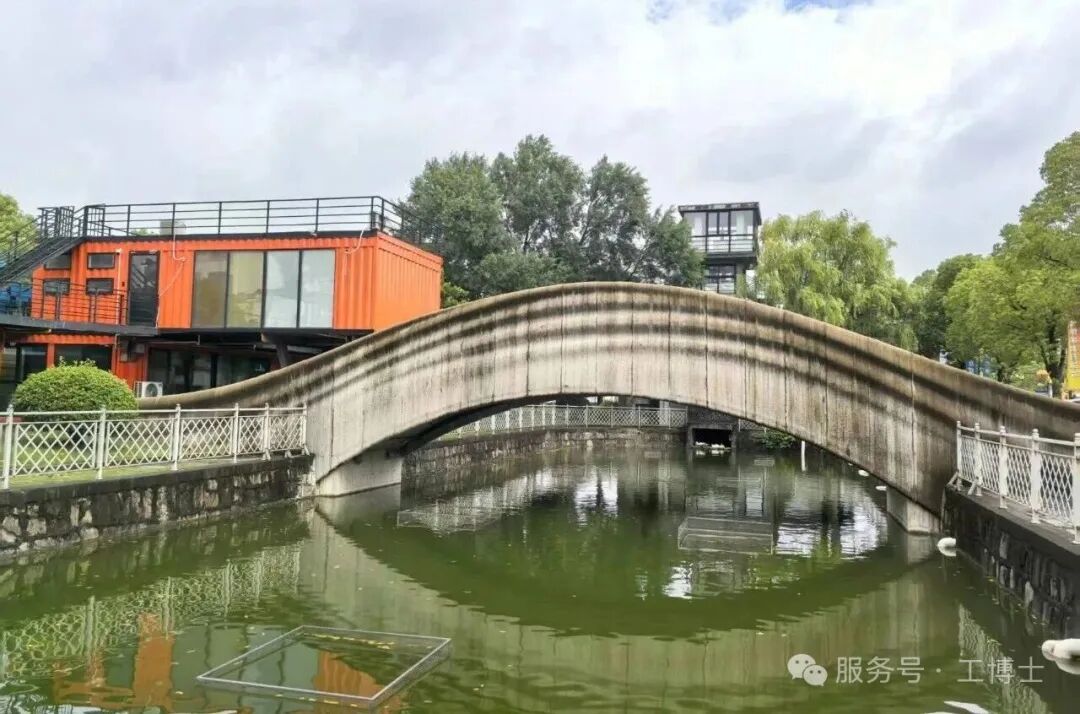
The 3D Printed Pedestrian Bridge at Shanghai Wisdom Bay Sci-Tech Park
In modern manufacturing and construction, there is a growing demand for customization, high efficiency, and the ability to create complex structures. Traditional production methods often face limitations when dealing with personalized designs, rapid iteration, or construction on complex terrain.
Against this backdrop, 3D printing robots are emerging as a novel form of intelligent construction.
Flexible Production and On-Site Manufacturing Become Trends
The current market is seeing a gradual increase in demand for non-standard customization, small-batch components, and special-shaped structures, particularly in areas such as architectural landscapes, urban furniture, interior decoration, and industrial molds.
Simultaneously, the complexity of construction site environments and the demand for project efficiency are driving the development of manufacturing technologies that can adapt to diverse scenarios. Driven by these needs, 3D printing robots offer a solution for rapid response, from design to finished product.
Intelligent Robots + Multi-Material Printing
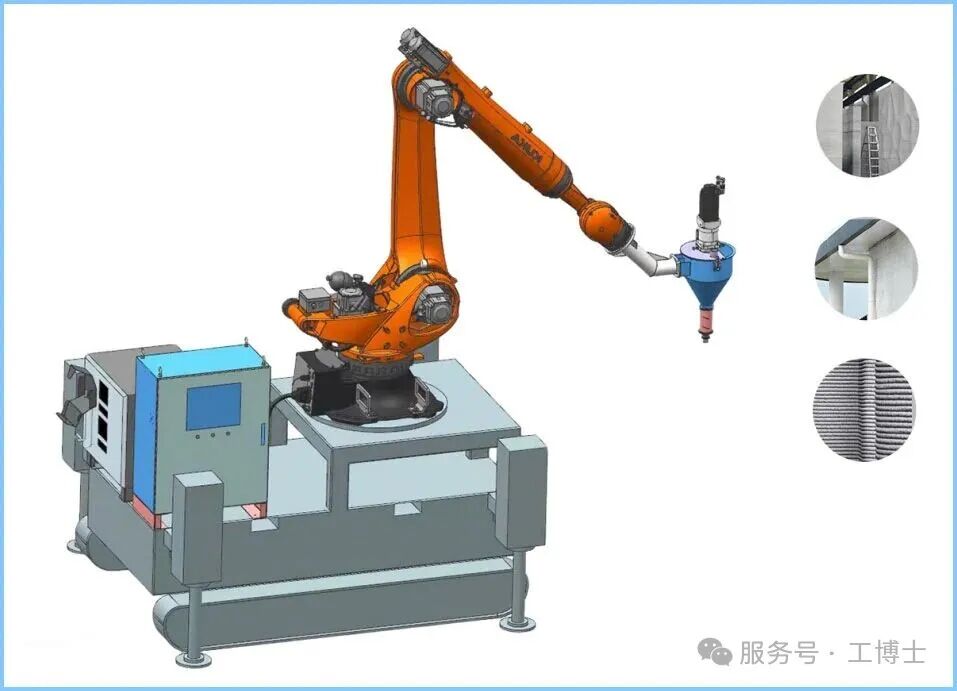
These systems typically integrate a high-degree-of-freedom robotic arm with an extrusion-based printing system and feature the following characteristics:
High Material Adaptability: They support various materials such as concrete, engineering plastics, and composites. The print head can be changed according to requirements, meeting different structural and decorative needs.
Mobility and On-Site Operation: Some models have mobile capabilities and do not require a fixed factory building. They can print directly on-site, such as at construction sites or outdoors, making them particularly suitable for landscape construction and building exterior finishes.
Digitally Driven Production: By integrating with parametric design software and structural simulation tools, they achieve a seamless transition from 3D models to robot motion paths, truly realizing "design-to-manufacturing."
Advantages in Efficiency, Flexibility, and Sustainability
Compared to traditional processes, 3D printing robots offer significant advantages in the following areas:
Enhanced Capability for Complex Structures: They can create complex forms such as curved surfaces, hollow structures, and porous geometries, overcoming the limitations of traditional molds or processing methods.
Shortened Cycle from Design to Product: They eliminate the need for mold making. Designs can be modified and directly sent to production, making them ideal for personalization and design iteration.
Reduced Material Waste and Labor Dependence: Material is extruded on-demand, reducing waste rates. Automated printing also decreases reliance on a large workforce of skilled laborers.
Adaptability to Non-Standard Work Environments: They are particularly suitable for outdoor settings, rugged terrains, or locations with restricted construction conditions.
3D Printed Landscape Bridge
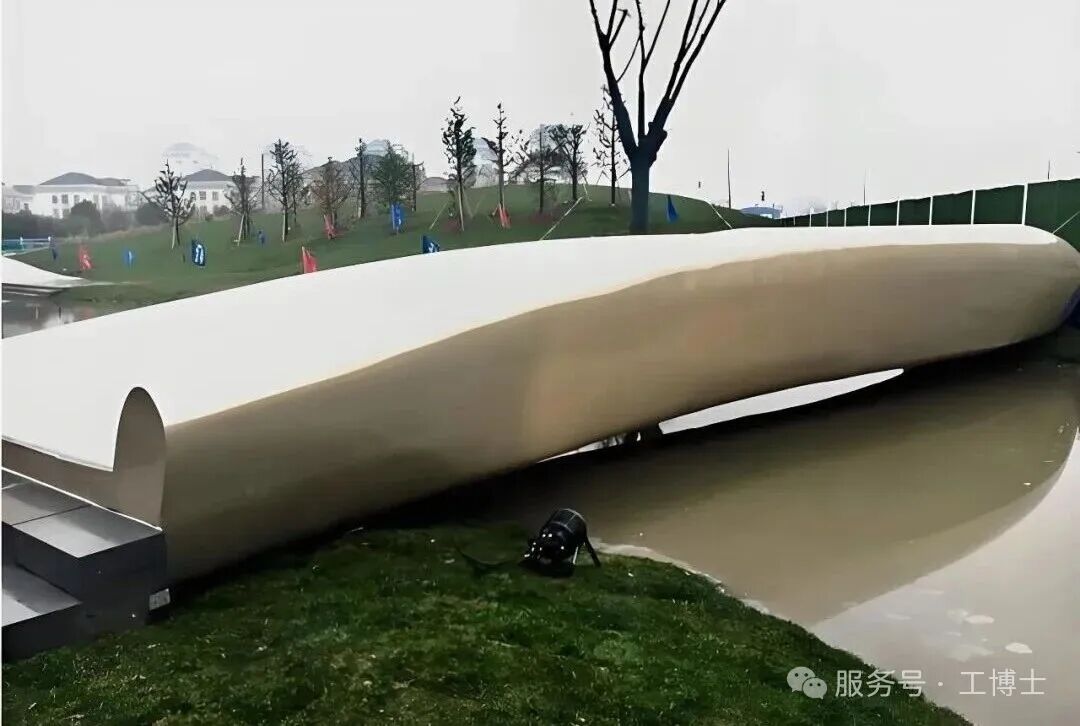
Taopu Central Green Space Landscape Bridge, Putuo District, Shanghai
Utilizing 3D printing robots
A gantry-type hybrid 3D printing robot system was used, achieving millimeter-level printing precision and enabling integrated, mold-less construction.
3D printing robot technology is gradually expanding its application scenarios in fields such as architecture, landscaping, and product manufacturing. As the demand for intelligent and flexible manufacturing continues to grow, this technology is expected to provide efficient, flexible, and sustainable production solutions for more industries.