

CNGBS offers standardized robot maintenance packages, integrating both basic upkeep and a predictive inspection system. Our Standard Package (1 year/4000 hours) and Basic Package (2 years/8000 hours) each include 16 core procedures: grease replacement, battery renewal, mechanical fastener checks, circuit inspection, and more. Additionally, five optional predictive services are available: iron particle concentration testing, repeat accuracy measurement, and motor vibration analysis, among others. By utilizing original spare parts and adhering to strict protocols, we effectively extend equipment lifespan, minimize unexpected downtime, and safeguard production stability.
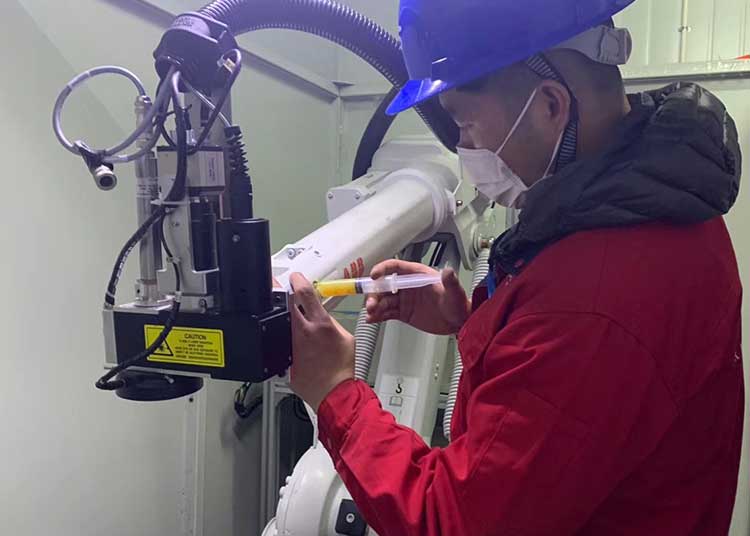
Maintenance Cycle: Recommended every 1 year (or approximately every 4000 hours). The robot system will issue a maintenance reminder based on its actual operating condition.
Function of Grease Replacement: Lubrication, auxiliary cooling, rust prevention, cleaning, and cushioning.
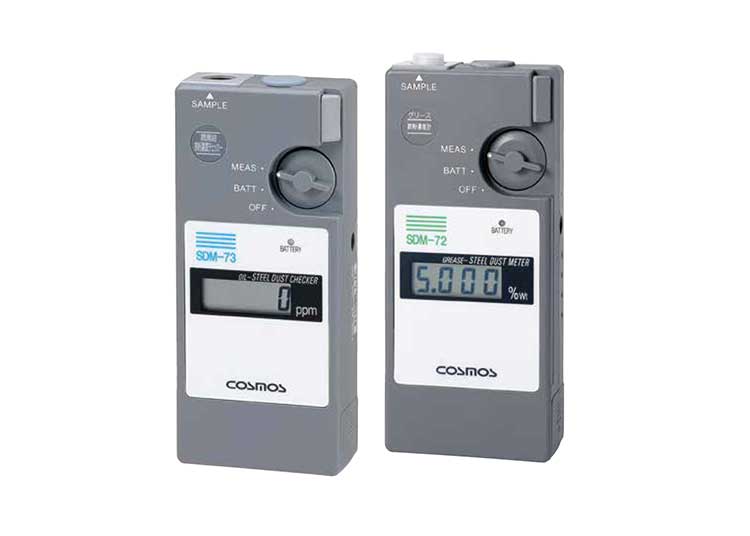
This procedure uses specialized equipment to measure the iron particle concentration in the grease within each robot joint reducer (specifically RV reducers).
Three-Tiered Response. Normal Value: Continue operation; Attention Value: Re-inspect after 3 months; Abnormal Value: Requires reducer replacement.
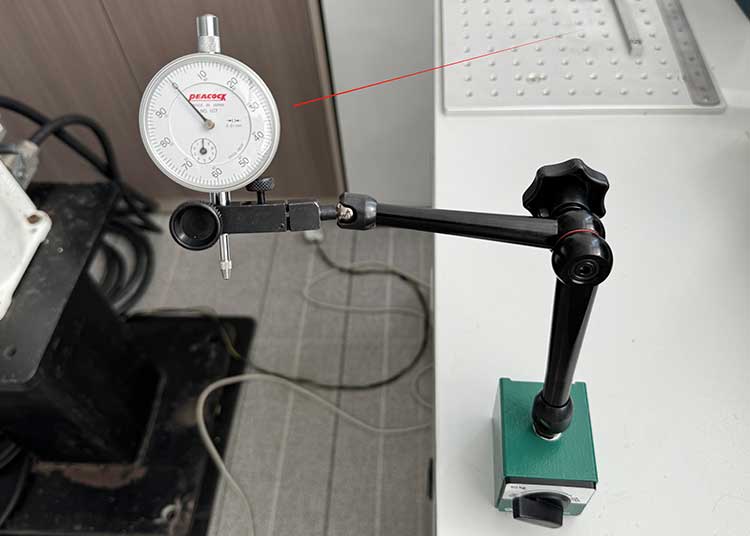
Uses a dial indicator to measure the robot's repeatability positioning accuracy, identifying potential abnormalities in the robot body.
Analyzes collected robot posture data to compute positioning errors across different locations.
Calculates the robot's repeat positioning accuracy to determine if it meets requirements, followed by an analysis of its performance characteristics.
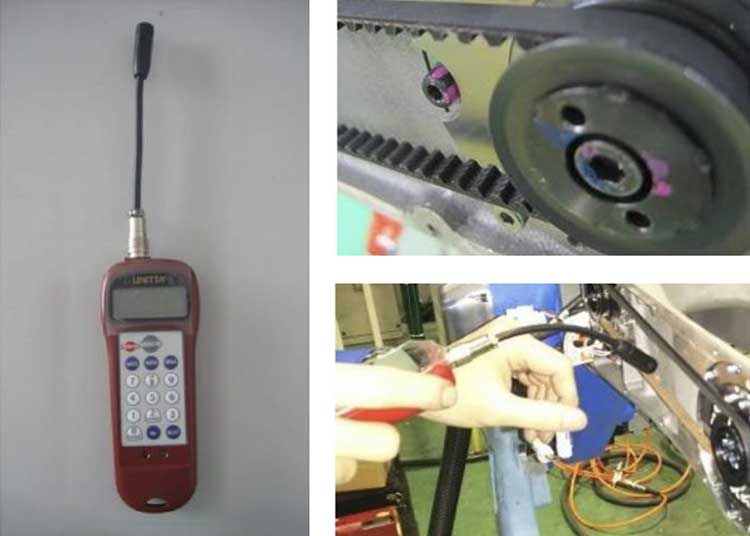
Improper belt tension (too loose or too tight) adversely affects operation (slippage if loose, potential breakage if tight).
This test uses an ultrasonic belt tension meter to measure the tension on axes utilizing belt drives within the robot, identifying any anomalies.
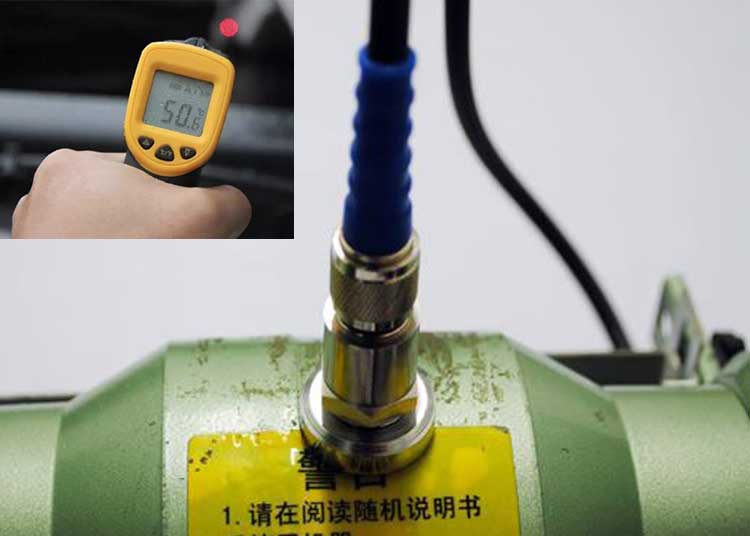
Assesses motor health through multi-dimensional measurements of vibration frequency, acceleration, velocity, and displacement.
Provides precise diagnosis by classifying vibration severity (Levels A-D) according to international standards, combined with motor power classification (Categories I-IV).
Enables early warning of potential faults like bearing wear or rotor imbalance, reducing unplanned downtime and ensuring production continuity.
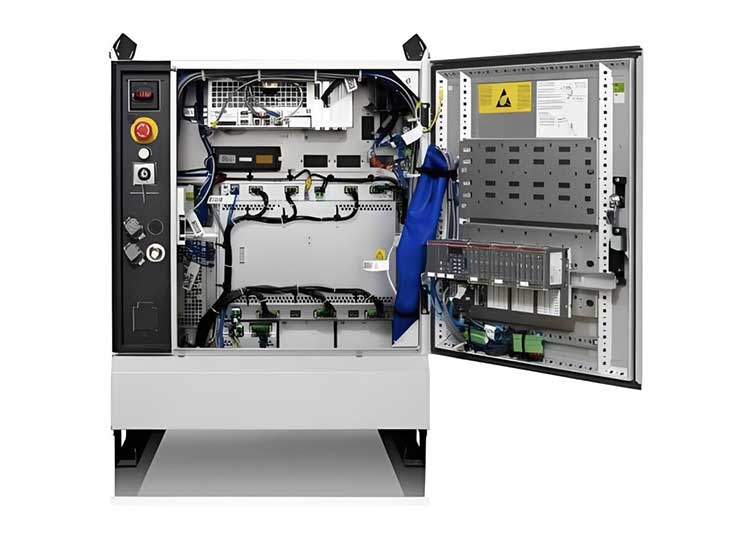
Regular cleaning is crucial for ensuring normal equipment operation. Benefits include: maintaining operational flexibility of components, ensuring effective heat dissipation for thermal elements, preventing airflow circuit obstructions, and avoiding equipment failures.
Focuses on thoroughly cleaning internal units and fans within the robot control cabinet.