
Anbot-G3 is a bionic quadruped built for stairs, steps and complex industrial terrain; Anbot-G3W pairs fast wheeled cruising with legged obstacle crossing. Both share the same laser SLAM autonomous navigation, ONEWAY CLOUD intelligent recognition and RMS backend, and can be deployed together by scenario.
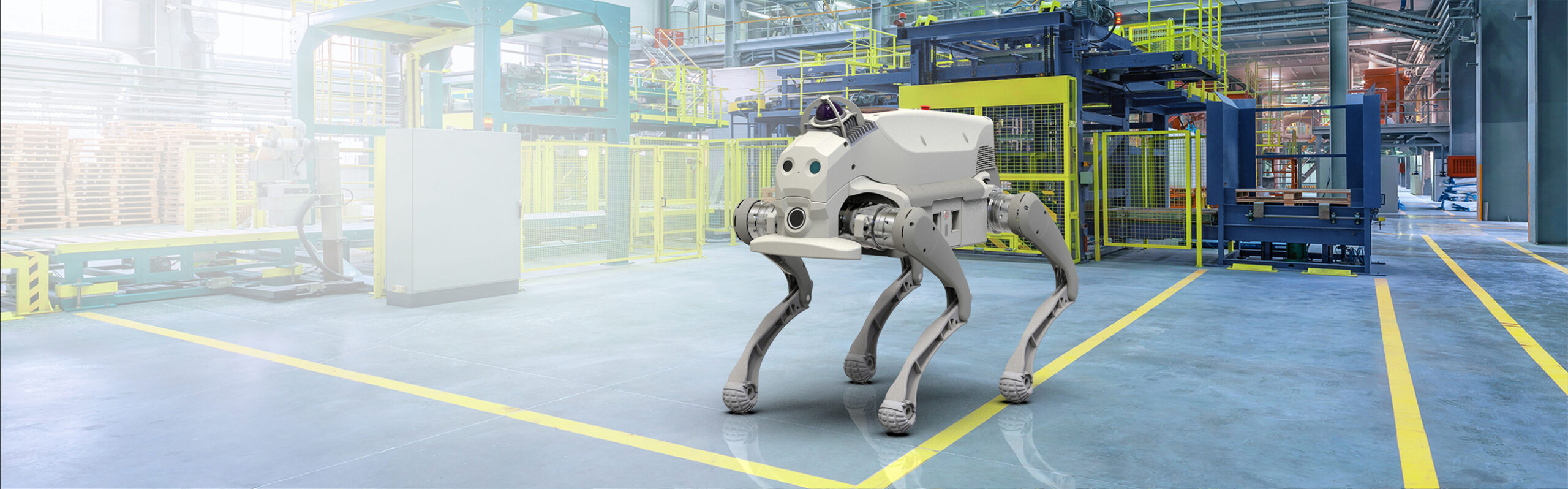
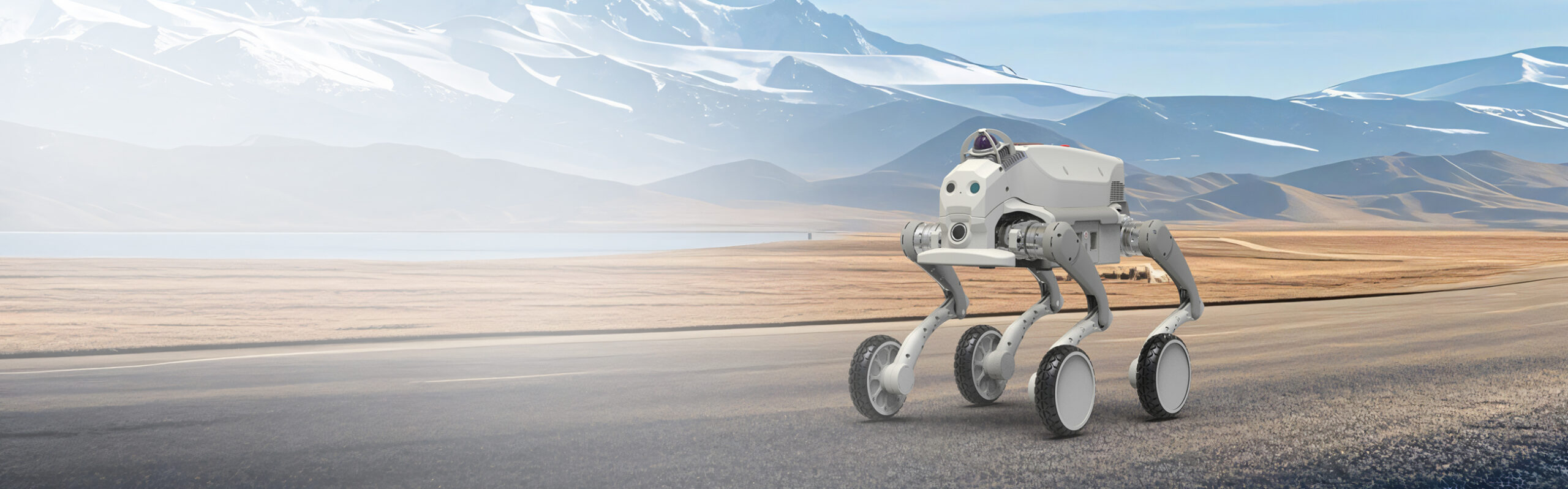
Built on the same navigation and recognition core — choose the form that matches your terrain and mission tempo: legs excel at obstacle crossing, wheel-legs at fast coverage of large open areas.
A bionic quadruped that runs, climbs stairs and withstands impact — ideal for stair-intensive buildings and complex industrial sites.
Switches seamlessly between wheeled cruising and legged obstacle crossing — steps, gullies and gravel are no barrier.
The Anbot-G3 is a bionic robot that supports autonomous navigation, video monitoring, intelligent recognition and complex task execution. It runs, climbs stairs and withstands impact, with long runtime — mainly for multi-scenario patrol, industrial inspection and consumer entertainment.
The wheel-legged robot dog merges fast wheeled movement with legged adaptation to complex terrain, combining high mobility with strong terrain passability. Its wheel-leg structure cruises at high speed on flat ground and switches gait to cross obstacles — suited to patrol, inspection and other multi-scenario tasks.
Three layers — autonomous driving, basic interaction and intelligent applications — managed consistently across the remote controller, RMS backend and mobile app.
Maps its environment and departs on missions autonomously — no rails or markers needed.
See the site in real time, hear it, and talk to the people on it.
Every patrol automatically produces traceable records and reports.
| Intelligent application | Capability |
|---|---|
| Video monitoring | Live video / historical video playback |
| Photo capture | Automatic capture / manual capture |
| Intelligent detection | Fixed points: face detection / license-plate detection / pedestrian-in-restricted-zone / trash-bin / vehicle-in-restricted-zone detection |
| Intelligent alerts | System alerts / business alerts |
Warehouses, factories, data centers, ports and terminals, power facilities and special-operation sites — patrol routes and recognition rules are configured per scenario.
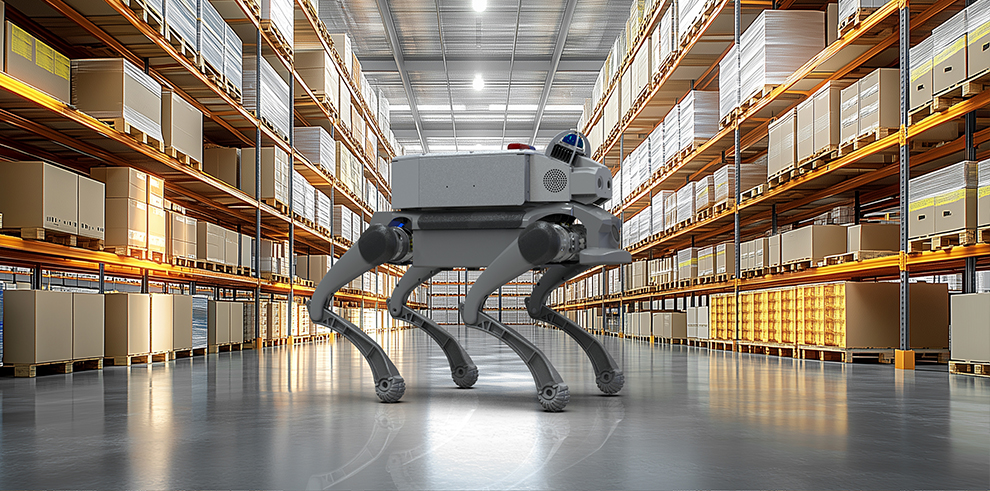
Aisle patrol, cargo anomalies and intrusion detection
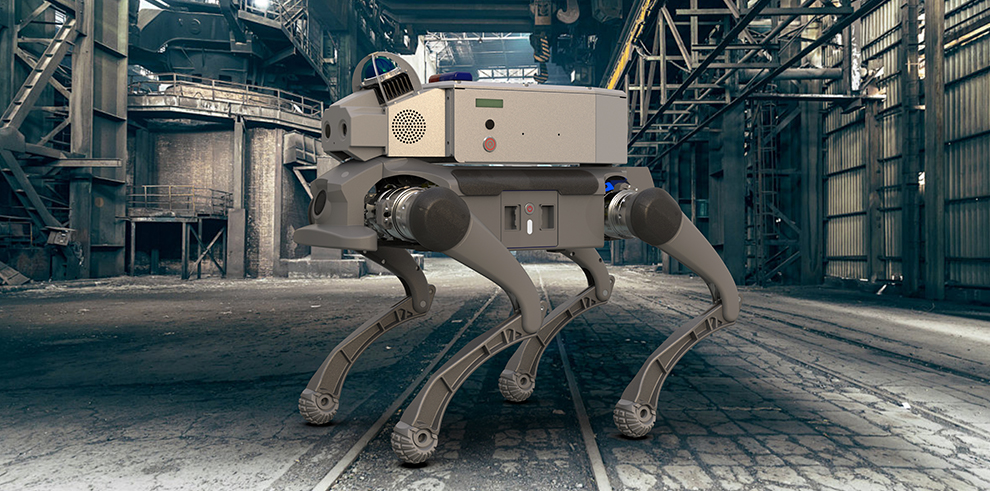
Equipment status, gauge readings and safety-aisle checks

Cold/hot-aisle patrols, indicator lights and anomaly detection
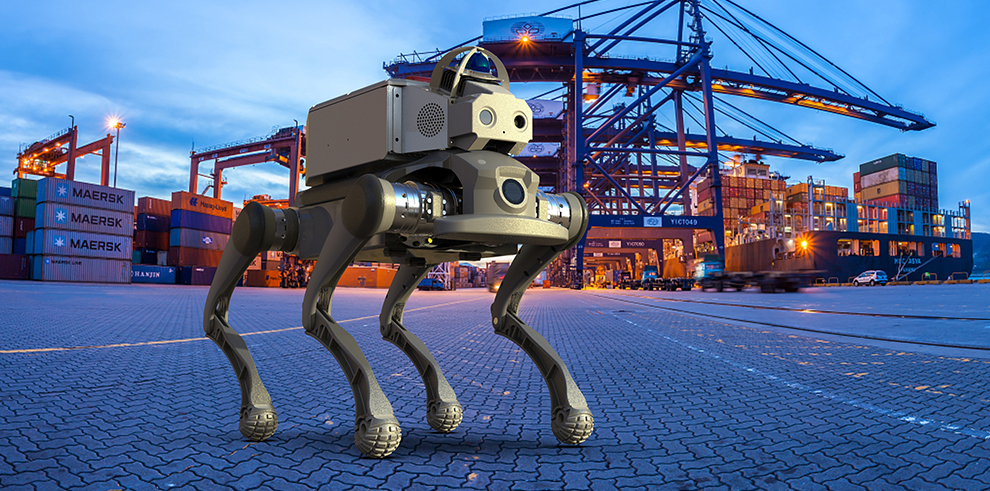
Scheduled patrols across large yards and work zones
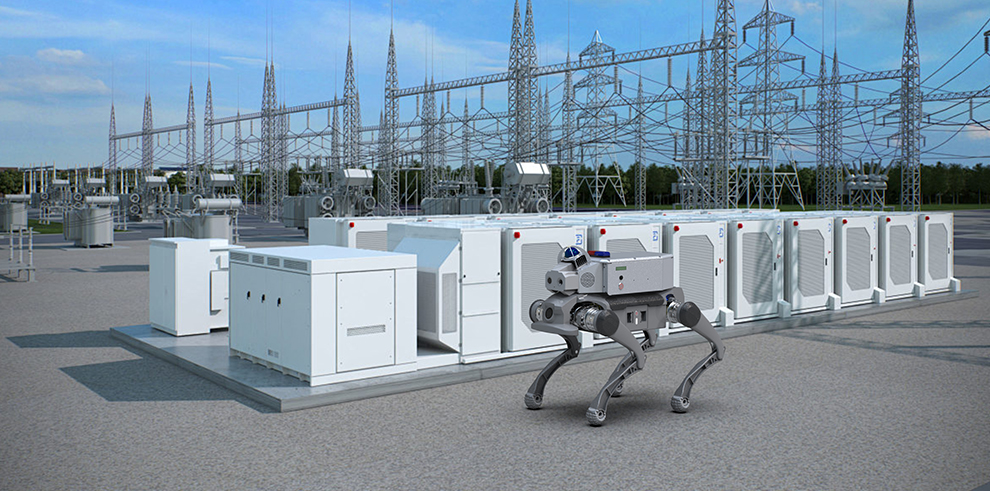
Routine patrols of substations, cable tunnels and outdoor equipment
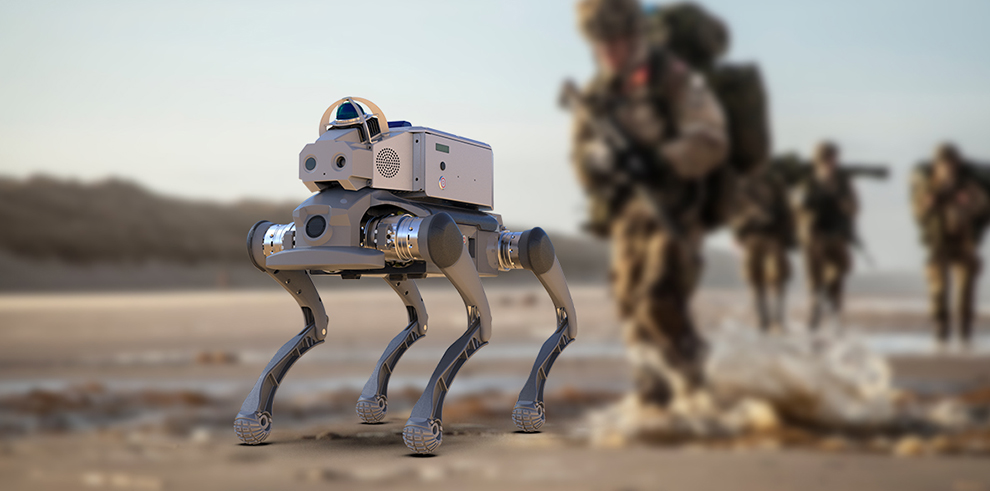
High-temperature, dusty and other environments unsuitable for prolonged human presence
Navigation, monitoring and AI-application specs are identical on both models — the real differences are size, weight and battery swapping (marked “Diff” in the table).
| Item | Anbot-G3 Quadruped Autonomous navigation version |
Anbot-G3W Wheel-Legged Autonomous navigation version |
|---|---|---|
| Standing size DIFF | Approx. 550 × 360 × 540 mm | Approx. 550 × 440 × 580 mm |
| Total weight DIFF | 20 kg (with battery) | 25 kg (with battery) |
| Protection rating | IP54 (standard) | IP54 (standard) |
| Battery | Body: DC48V / 5Ah | Body: DC48V / 5Ah |
| Runtime Laboratory conditions | 40 min | 40 min |
| Charging time DIFF | 1 h (manual swap supported) | 1 h |
| Charging method DIFF | Manual battery swap supported | Manual quick battery swap |
| Operating temperature | 0 ℃ – 40 ℃ | 0 ℃ – 40 ℃ |
| Walkable surfaces | Cement / asphalt / gravel / brick, etc. | Cement / asphalt / gravel / brick, etc. |
| Control methods | Autonomous walking · remote controller · RMS backend · mobile app | Autonomous walking · remote controller · RMS backend · mobile app |
| Body material | Aluminum alloy + high-strength engineering plastic | Aluminum alloy + high-strength engineering plastic |
| Max total power | 3600 W | 3600 W |
| Consecutive stair-climbing height | 16 cm per step | 16 cm per step |
| Max climbing angle | 30 – 40° | 30 – 40° |
| Max speed | 3.5 m/s | 3.5 m/s |
| Min turning radius | 0 mm (turns in place) | 0 mm (turns in place) |
| Standard poses | Stand / lie down / sidestep / turn, etc. | Stand / lie down / sidestep / turn, etc. |
| Monitoring camera | DFOV 122°, HFOV 111°, VFOV 70° | DFOV 122°, HFOV 111°, VFOV 70° |
| Infrared camera | Resolution 256 × 192 | Resolution 256 × 192 |
| Cloud historical video | Historical video stored server-side by default | Historical video stored server-side by default |
| Navigation & localization | Laser SLAM | Laser SLAM |
| Obstacle avoidance | Laser | Laser |
| Max autonomous navigation speed | 1.6 m/s | 1.6 m/s |
| Mappable area | 1,000,000 m² | 1,000,000 m² |
| Localization accuracy | ±10 cm | ±10 cm |
| Obstacle recognition height | ≥ 35 cm | ≥ 35 cm |
| AI applications | Video monitoring · photo capture · intelligent detection · intelligent alerts | Video monitoring · photo capture · intelligent detection · intelligent alerts |
* The 40 min runtime is laboratory-condition data; actual runtime varies with load, surface and temperature. Charging time refers to manual battery swapping. Parameters are compiled from Wanwei Robot's official Anbot-G3 / Anbot-G3W product pages; where discrepancies exist, the manufacturer's latest documentation prevails.
Hardware, algorithms and backend are developed by one team — and the system keeps expanding after delivery.
Multimodal perception fusion, SLAM and dynamic path planning — a decade of in-house R&D.
Key components built on an automotive-grade platform for long, continuous inspection duty.
A nationwide service network covering on-site delivery, commissioning and maintenance.
Open business functions and permission configuration — integrates with existing security, O&M and business systems.